Cricket has a longer shopping list than most sports, and a lot of it only matters once you start facing a hard ball. This guide sets out the full kit, tells you what to buy first, and is honest about what you can borrow or skip while you are starting out.
To play cricket with a hard ball you need eight things: a bat, batting gloves, leg guards, a helmet, an abdominal guard, cricket shoes, whites or team kit, and a bag to carry it. Bowlers and fielders only need shoes and kit. For tennis ball cricket, a bat and shoes are enough to start.
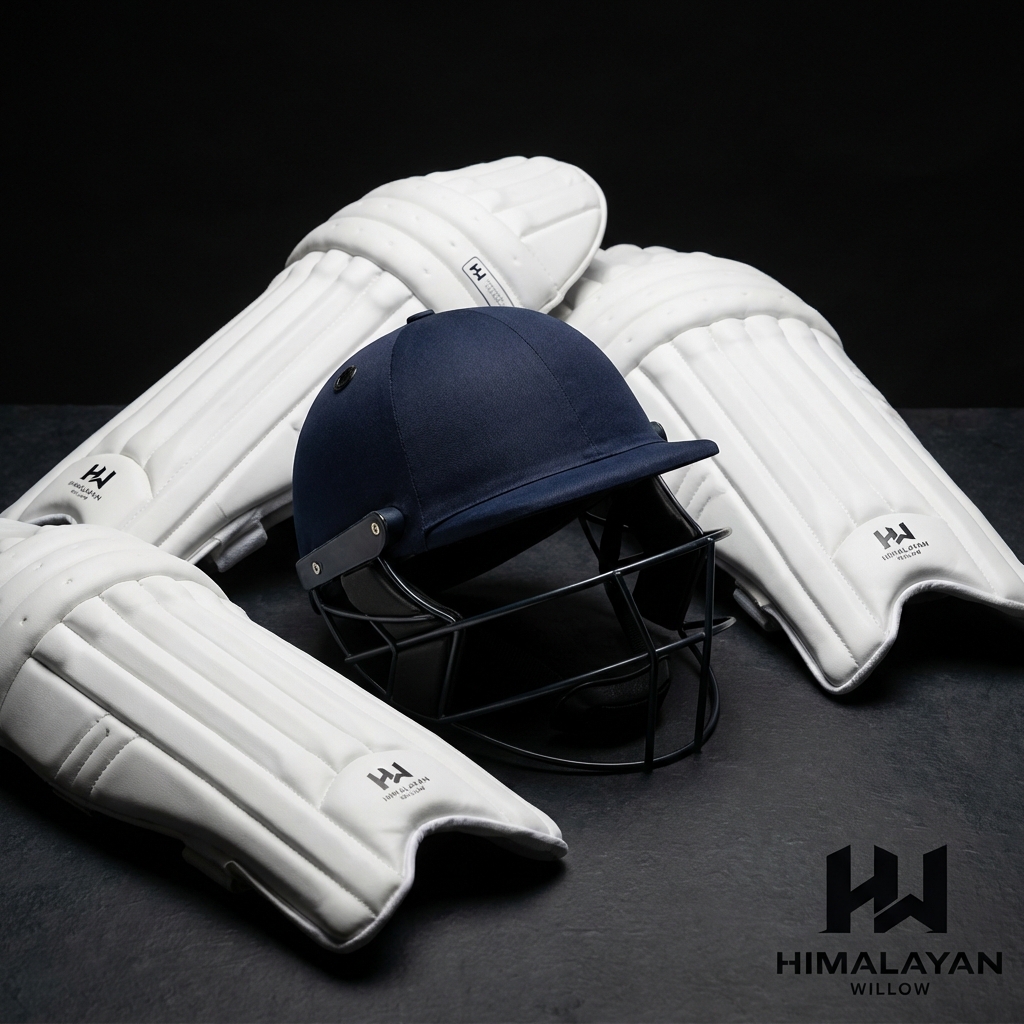
What Do You Need to Play Cricket?
Here is the complete list. The middle column is the part most checklists leave out: not everything here is required on day one, and knowing the difference saves a lot of money.
| Equipment | Do you need it? | Why |
|---|---|---|
| Cricket bat | Essential to bat | Sized to your height, in English or Kashmir willow. Borrow one before you buy. |
| Batting gloves | Essential to bat | Protects fingers and knuckles. The one item you should never share. |
| Leg guards (pads) | Essential to bat | Shields knees and shins from a ball travelling at pace. |
| Helmet | Essential to bat | Non-negotiable against a hard ball at any level. |
| Abdominal guard (box) | Essential to bat | The cheapest item on this list and the one you least want to forget. |
| Cricket shoes | Essential for everyone | Spikes for grass, rubber for artificial and indoor surfaces. |
| Whites or team kit | Essential for matches | Not needed for nets or informal cricket. |
| Kit bag | Needed once you own the kit | A duffle is plenty until you own pads and a helmet. |
| Thigh guard | Strongly recommended | The most common place to get hit facing fast bowling. |
| Inner gloves | Recommended | Absorbs sweat and roughly doubles the life of your batting gloves. |
| Arm guard | Optional | Worth it once you face bowling that rises above waist height. |
| Chest guard | Optional | For genuinely hostile bowling. Most club batters never buy one. |
| Inner thigh pad | Optional | Pairs with a thigh guard for full front-leg cover. |
| Wicketkeeping gloves and inners | Keepers only | Different from batting gloves — see our gloves guide. |
That is fourteen items, which is daunting if you read it as a shopping list. It is not one. The next section is the order to actually buy them in.
What Should I Buy for Cricket First?
The mistake almost every beginner makes is buying a bat first. A bat is the most expensive item, the most personal, and the one you are least equipped to choose before you have played. Buy in this order instead:
- Abdominal guard and cricket shoes. Cheap, personal, and needed from your very first session. Nobody lends these.
- Batting gloves and inner gloves. Shared club gloves are damp and rarely fit. This is the first real comfort upgrade.
- Helmet. Buy your own as soon as you face hard-ball bowling. Fit matters, and a borrowed helmet rarely fits properly.
- Leg guards and a thigh guard. Club pads are usually available, so this can wait a few weeks, but not a season.
- Bat. By now you know your height, your weight preference and whether you play front or back foot. Read our bat buying guide before you spend.
- Kit bag and whites. Only once you own enough to carry and a match to play in.
What Do Bowlers, Fielders and Wicketkeepers Need?
Almost everything in a cricket bag is batting equipment, which is why the kit list looks so long. Split by role it gets much simpler.
Bowlers & Fielders
- Cricket shoes, spiked for grass
- Whites or team kit
- Cap or sun hat
- Nothing else is required
Batters
- Everything marked essential above
- Thigh guard for pace bowling
- Arm guard once the ball rises
- Their own gloves, always
Wicketkeepers
- Keeping gloves plus inners
- Keeping pads, shorter and lighter
- Abdominal guard
- Helmet when standing up to the stumps
If you are joining a club purely to bowl, cricket shoes and whites will get you through a season. Everything else can wait until you are asked to bat.
What Do You Need for Tennis Ball and Tape Ball Cricket?
Most cricket played in Nepal is tennis ball or tape ball cricket, and the kit list is far shorter. A bat and a pair of shoes will get you playing.
That said, a taped tennis ball is harder than people expect and comes on quicker off the surface. Once the bowling gets sharp, add batting gloves, an abdominal guard and a thigh guard. A helmet is sensible for anyone facing genuine pace, even with a tennis ball. Full leg guards are usually unnecessary.
A Kashmir Willow bat suits tennis ball cricket better than English Willow, because the harder, denser wood copes with taped balls without denting. Our English Willow vs Kashmir Willow comparison covers the difference in detail.
How Much Does a Cricket Kit Cost?
Total cost is driven almost entirely by the bat, because bat prices vary more than everything else combined. In Nepal a Kashmir Willow bat starts from around NPR 4,000, while an entry-level English Willow bat starts near NPR 10,000 and premium grades run considerably higher.
The protective items vary far less. A sensible way to budget is in three stages rather than one purchase:
- Stage one — getting started: abdominal guard, shoes, batting gloves. The smallest outlay that lets you train properly.
- Stage two — playing matches: helmet, leg guards, thigh guard, whites. Add these once you are batting against a hard ball.
- Stage three — your own bat: the largest single item, and the one worth waiting for.
Spread across a season, a full kit is much more manageable than it looks as a single list. For current pricing on any item, see our cricket gear collection, or message us with your budget and we will put a kit together around it.
Do You Need a Helmet to Play Cricket?
Yes — against a hard ball a helmet is not optional at any level, and most clubs and school competitions require one. Modern helmets must meet the BS7928:2013 standard. Here's what to look for:
- Fixed Grille: Prevents the ball from passing through. A must for facing pace.
- Neck Guard (Stem Guard): Additional protection for the back of the neck.
- Fit: Should sit firmly without wobbling. Adjust the chin strap and rear dial.
- Ventilation: Multiple air vents to keep you cool during long innings.
Leg Guards (Pads)
Your pads protect your knees and shins from painful blows.
Batting Pads
- Thicker and heavier construction
- Maximum impact protection
- Designed for stationary stance
Keeping Pads
- Lighter and shorter design
- Built for quick movement
- Streamlined for agility
Sizing Tip: The knee roll should sit exactly over your knee cap when standing straight. Too high or low means wrong size.
What Other Protection Do You Need?
Often overlooked but critical for safety:
- Abdominal Guard (Box): The most important piece of plastic you'll own. Never bat without it.
- Thigh Guard: Essential for facing fast bowling. Prevents painful bruising on the front thigh.
- Inner Thigh Pad: Protects the inside of your thigh from edges and bouncers.
- Arm Guard: Shields your forearm and elbow from rising deliveries.
- Chest Guard: Additional rib protection for facing hostile bowling.
What Kit Bag Do You Need?
Once you have the gear, you need to carry it.
- Wheelie Bags: Best for seniors with full kits. Easy on the back, multiple compartments.
- Duffle Bags: Great for training sessions and carrying on motorbikes/cycles.
- Backpacks: Compact option for juniors or those with minimal gear.
Frequently Asked Questions
What do I need to play cricket?
To play cricket with a hard ball you need a bat, batting gloves, leg guards, a helmet and an abdominal guard, plus cricket shoes and whites or team kit. A kit bag carries it all. Bowlers and fielders can play with just shoes and whites, but anyone who bats needs the protective items.
What should I buy for cricket as a beginner?
Buy protection before performance. Start with an abdominal guard, a helmet, batting gloves and leg guards, then cricket shoes, then a bat sized to your height. Whites and a kit bag can come last. Clubs and schools often lend bats and pads for your first few sessions, so ask before buying everything at once.
What is the minimum equipment needed to start playing cricket?
The absolute minimum for a beginner joining a club is cricket shoes, an abdominal guard and batting gloves. Most clubs have shared bats, pads and helmets you can borrow while you decide whether the sport is for you. For tennis ball or gully cricket, a bat and shoes are genuinely enough.
Do I need my own bat to start playing cricket?
No. Most clubs, schools and academies keep shared bats for beginners and net sessions. Borrow one for your first month, work out the size and weight that suits you, then buy. A bat bought before you know your preferred weight is usually the wrong bat.
What do bowlers and fielders need to play cricket?
Far less than batters. Bowlers and fielders need cricket shoes with the right sole for the surface, whites or team kit, and a sun hat or cap. Bowlers running on grass usually want spiked shoes for grip. Everything else in a kit bag is batting equipment.
What do I need for tennis ball or tape ball cricket?
A bat and shoes cover most tennis ball cricket. A taped or heavy tennis ball hits harder than people expect, so batting gloves, an abdominal guard and thigh and arm guards are worth adding once the bowling gets quick. A helmet is sensible for anyone facing genuine pace.
How much does a full cricket kit cost?
It depends entirely on the level you buy at. A beginner set built around a Kashmir Willow bat is a fraction of the cost of a kit built around a Grade 1 English Willow bat — Kashmir Willow bats start from around NPR 4,000 in Nepal while English Willow starts near NPR 10,000. Build the kit over a season rather than buying everything at once.
Can I wash my cricket pads?
Most pads are not machine washable. Wipe them down with a damp cloth after use and air dry them out of direct sunlight. Removable inner padding can sometimes be hand washed separately.
How often should I replace my cricket helmet?
Replace it after any significant impact, and every 3 to 5 years even without visible damage, because the protective foam degrades over time. Check that any replacement meets the BS7928:2013 standard.
Do I need all this protection for tennis ball cricket?
Basic protection — batting gloves and an abdominal guard — is still recommended. For tape ball cricket with heavy taped tennis balls, add thigh and arm guards. Full pads and a helmet are usually unnecessary unless the bowling is genuinely fast.
Which cricket kit bag size do I need?
A full kit with bat, pads, helmet, gloves, shoes and clothes needs a large wheelie bag. If you only carry gloves, shoes and a bat to training, a medium duffle is easier to handle and fits on a motorbike.
Where can I buy cricket equipment in Nepal?
Himalayan Willow stocks the full kit list at our store in Uttardhoka, Lazimpat, Kathmandu, where you can try helmets and pads for fit before buying. We also deliver across all 77 districts of Nepal and ship internationally through our online store.